CAMPUS NEWS
Big Ideas and Bold Moves: The College’s 2025 Recap
Published: Dec. 23, 2025
Innovation, discovery and leadership defined 2025 for the College of Arts and Sciences. From welcoming a visionary new dean to launching the first-of-its-kind Artificial Intelligence (AI) + X degrees, this year showcased our commitment to shaping the future and leading the way. Our researchers and artists pushed the boundaries of knowledge and our College community celebrated milestones like welcoming the Class of 2029. Here’s a look back at some of the highlights that made 2025 unforgettable.
Welcome Dean Grabill

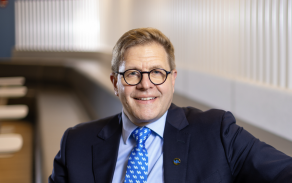
Dean Jeff Grabill, whose vision and leadership will guide the College into an era of innovation and collaboration, joined UB in August.
AI + X Degree Offerings

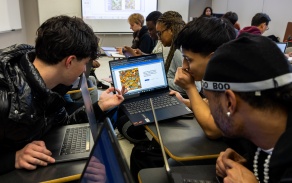
The first-of-their-kind degree programs that combine the rapidly evolving field of artificial intelligence with academic disciplines in the College. The seven new AI + X bachelor's degrees and two minors will prepare students for a variety of careers across disciplines.
Hello, Class of 2029

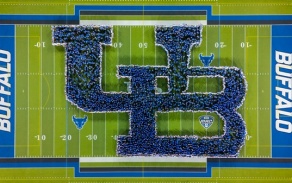
The College has more than 1,200 new and transfer undergraduate students to the campus in the fall. The campus provided a warm welcome for the incoming class.
Tracking Biodiversity from Space

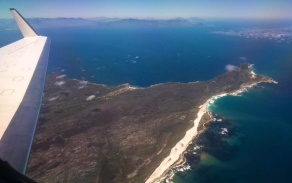
BioSCape, a multinational research project funded by NASA and co-led by Adam Wilson, associate professor, demonstrated that Earth’s biodiversity can be monitored and measured from space, leading to a better understanding of terrestrial and aquatic ecosystems.
A New Home/Hub for Indigenous Studies

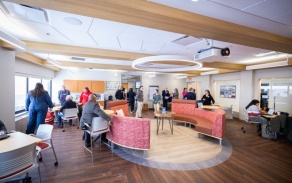
The opening of the dedicated space Indigenous Studies home/hub creates a vibrant hub for scholarship, community engagement and cultural exchange. The home/hub is a space for sharing knowledge and fostering dialogue that enriches our academic community.
“Birds of Buffalo” public mural at terminal in Buffalo


The newly renovated Delaware, Lackawanna and Western (DL&W) terminal includes a sprawling new mural, “Birds of Buffalo,” spanning nearly 300 feet of the train platform, features 154 species of local birds, drawn from sightings at nearby Tifft Nature Preserve by art professor, Joan Linder.
Moon Rocks Land at UB

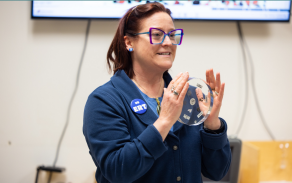
Moon rocks from NASA’s Apollo missions arrived on campus, offering students and researchers a rare opportunity to study pieces of lunar history.
Fighting “Forever Chemicals”

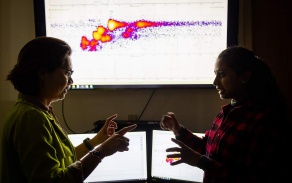
Scientists identified a bacteria strain capable of breaking down PFAS, the persistent “forever chemicals” that threaten ecosystems worldwide.
Mellon Grant Advances Immigration Research


The Philosophy, Politics and Economics (PPE) program received a prestigious Mellon Foundation grant to support groundbreaking research on immigration. This initiative will foster interdisciplinary collaboration and examine how inclusive immigration practices in a Rust Belt City, like Buffalo, affect democracy and democratic norms.
Switch-Like Genes May Unlock Cellular Secrets

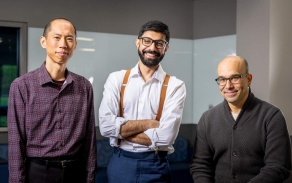
Researchers found that genes that act like on-off switches, controlling critical cellular processes. This breakthrough could pave the way for new treatments and deepen our understanding of genetic regulation in health and disease.
Late Midlife Brings Less Regret, More Acceptance


Research study shows ages 56 to 65 often foster self-transcendence as part of life’s journey, with greater acceptance, reduced regret and deeper satisfaction.
Climate Anxiety and Social Media

Researchers examined how social media influences climate anxiety, shedding light on the complex relationship between digital platforms and mental health in the era of climate change. This timely study offers insights into how online discourse shapes public perception and emotional responses to environmental challenges.