MS in Biological Sciences
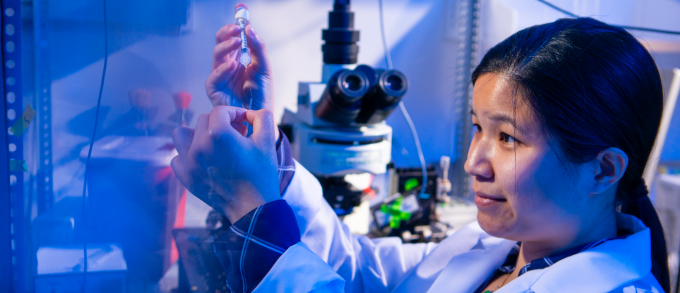
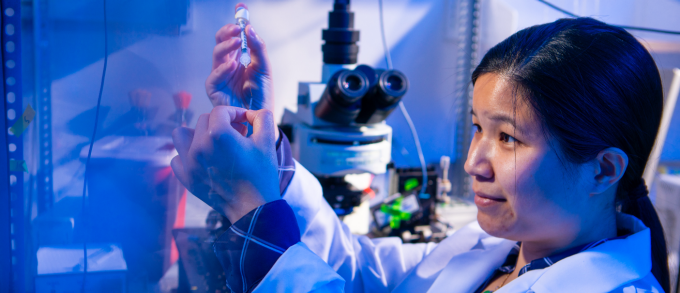
Build research skills. Discover your direction.
The MS in Biological Sciences at the University at Buffalo is designed for students who want hands-on research training, close faculty mentorship and a strong foundation for research careers or advanced graduate study. This program is especially well-suited for students who want to build confidence and experience in a supportive R1 research environment.
UB offers a research environment that combines high-impact science with individualized mentorship. The MS program is intentionally structured to help students explore research, develop core skills and clarify long-term goals.
Why students choose UB:
- Learn at an R1 research university with active, accessible faculty mentors
- Join research labs that span biology from molecules to populations
- Gain structured training in experimental design, data analysis and scientific communication
- Work closely with advisors who help refine interests and next steps
- Study in a collaborative department where graduate students are known and supported
The MS in Biological Sciences combines graduate-level coursework, structured research experiences and an original research project. The program is designed to help students explore biological research areas, build core scientific skills and develop a clear research focus. In this program, you will:
- Complete graduate coursework in key areas of biological sciences
- Rotate through multiple research labs early in the program
- Develop skills in experimental design, data analysis and scientific communication
- Conduct an original, faculty-mentored research project
Areas of study commonly include:
- Molecular biology and gene expression
- Sensory biology and neuroscience
- Evolutionary genomics and population biology
- Experimental design and data interpretation
- Scientific writing and oral communication
Program highlights
- Degree earned: Master of Science in Biological Sciences
- Graduate-level coursework that builds scientific foundations
- Multiple laboratory rotations in the first year
- Faculty-mentored original research project
- Option to transition into the PhD program for students who excel
MS vs MA in Biological Sciences
The MS in Biological Sciences is a structured, research-intensive program with lab rotations, designed for students seeking deep research training or planning for a future PhD. The MA (Special Master’s Program) offers a flexible, customizable path for students preparing for professional school, exploring career options or strengthening their academic profile on a timeline that fits other commitments.
Choose the MA for flexibility and personalization, or the MS for immersive research preparation.
A defining feature of the MS program is its structured approach to research development.
Year one: Explore and build skills
Students complete two or three short research rotations to:
- Explore different research areas and lab environments
- Learn core laboratory techniques
- Identify a faculty mentor aligned with their interests
Year two: Focus and produce
Students join a research lab and complete an original research project under faculty supervision. The program culminates in a written research report that reflects professional scientific standards.
Coursework supports research development while allowing flexibility to explore areas aligned with your interests and career goals. Classes emphasize critical thinking, data interpretation and scientific communication.
Students commonly study:
- Molecular biology and regulation of gene expression
- Sensory biology and neuroscience
- Evolutionary genomics and population biology
- Experimental design and quantitative data analysis
- Scientific writing and oral presentation skills
Courses are taught by active researchers and often connect directly to ongoing faculty research. Seminars and project-based classes emphasize evaluating primary literature and communicating scientific results clearly.
By completing the MS in Biological Sciences, graduates will be able to:
- Design and carry out hypothesis-driven research
- Analyze and interpret biological data using appropriate methods
- Communicate scientific findings through professional writing and presentations
- Read and evaluate primary research literature critically
- Work independently and collaboratively in a research environment
Graduates pursue a range of outcomes, including:
- Research positions in academic, government or industry laboratories
- Biotechnology and pharmaceutical roles
- Teaching and science education pathways
- Continued graduate study, including PhD programs
- Advanced training in health-related or scientific fields
For many students, the MS serves as a bridge between undergraduate study and long-term research or professional goals.
Pathway to the PhD
Students who perform exceptionally well in the MS program may be eligible to transition into the PhD in Biological Sciences. This option allows motivated students to continue their research trajectory without interruption.
If you want to gain real research experience, work closely with faculty mentors and prepare for advanced scientific careers, the MS in Biological Sciences at UB offers a clear and supportive path forward.
Current UB students
Already a student in the Department of Biological Sciences? Find program handbooks, Graduate School forms and other tools to help you stay on track.
If you have questions about our programs, please contact:


