Chemistry Instrumentation Center
Cutting-edge tools for hands-on discovery
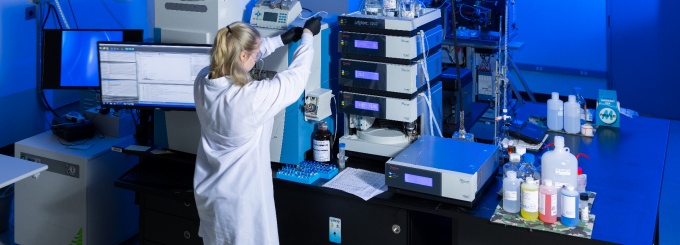
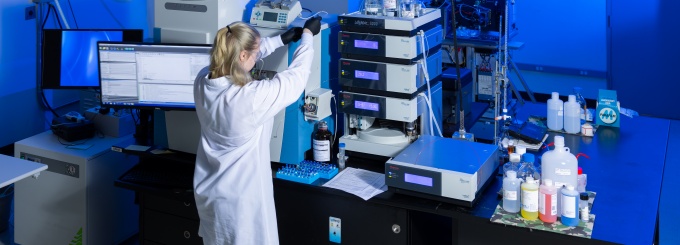
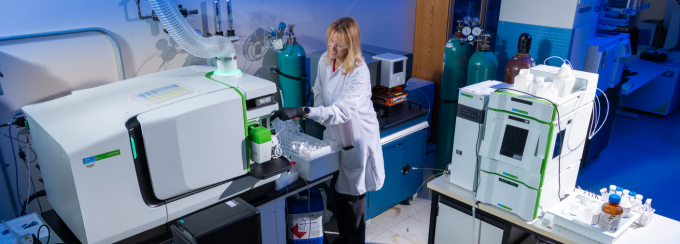
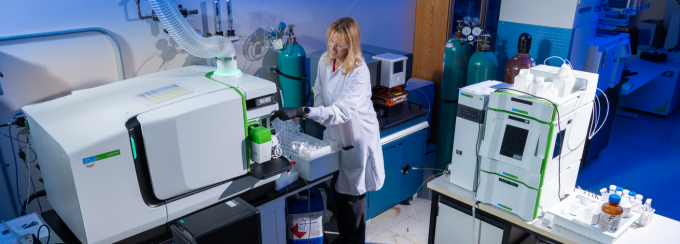
Located on the third floor of the Natural Sciences Complex, the UB Chemistry Instrumentation Center (UBCIC) advances research and education through instrumental analysis. Equipped with state-of-the-art instrumentation, comprehensive training programs and dedicated full-time scientific staff, the center supports a wide range of research projects at UB and within the broader community. The UBCIC provides customized sample analysis and offers training for researchers who wish to conduct their own analyses.
On this page:
Please send all inquiries to: che-ic@buffalo.edu
The UBCIC scientific staff works with UB students, faculty, and researchers to provide:
- Training to operate instrumentation
- Custom analysis and method development for your specific research project
- Consultation for a range of analytical and instrumental topics
📧 Have questions or want to collaborate? Email us at che-ic@buffalo.edu
UBCIC instrumentation is supported by the National Science Foundation, the College of Arts and Sciences, the Office of the Vice President for Research and Economic Development, and generous alumni and community contributions
- Elemental Analysis
- X-Ray Diffraction (single crystal, powder, and pair distribution function)
- Small angle/ wide angle X-ray scattering (bioSAXS, variable temperature SAXS/WAXS, GISAXS, GIWAXS)
- Inductively coupled plasma mass spectrometry (ICPMS)
- High Resolution/Accurate Mass Structural Analysis
- Q-Exactive LCMS Orbitrap Mass Spectrometry
- Q-Exactive GCMS Orbitrap Mass Spectrometry
- Gas chromatography mass spectrometry (GCMS)
- Liquid chromatography mass spectrometry (LCMS)
- Thermogravimetric analysis (TGA)
- Infra-red analysis (FTIR with ATR)
- Spectral analysis (UV-VIS)
- GC and HPLC with multiple detectors
- Method development for qualitative and quantitative applications
- Training
Want to submit a sample? Here's how:
Download the submission form(s) needed below and email the completed form(s) to: che-ic@buffalo.edu
- 📘 Access training modules via UBLearns (UB login required)
- 📝 All publications using UBCIC resources must include a formal acknowledgment. Contact CHE-IC@buffalo.edu for the correct funding acknowledgement information.
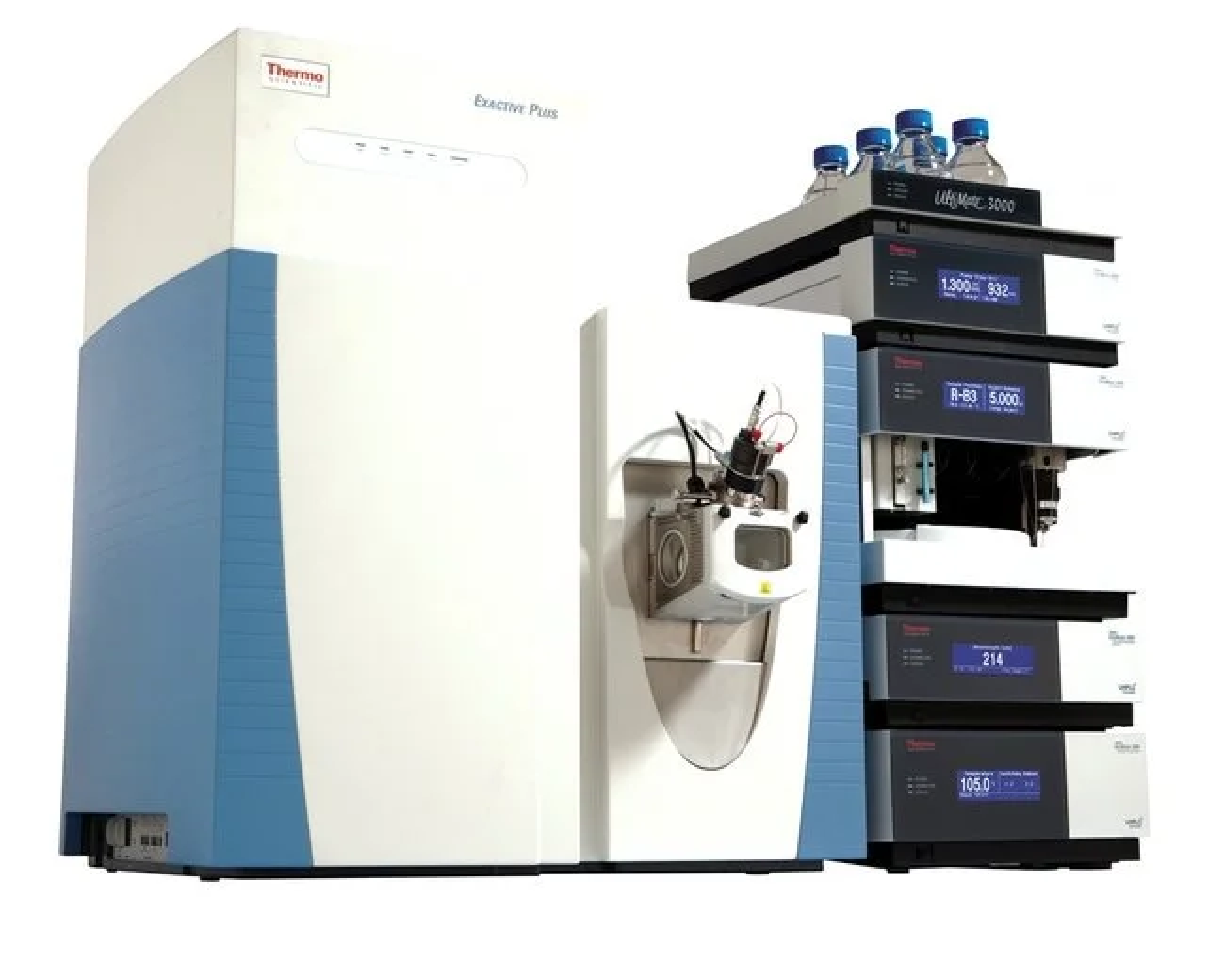
Thermo Fisher Q-Exactive Liquid Chromatography Orbitrap Tandem Mass Spectrometer (QE-LCMSMS)
This high-resolution mass spectrometer is built for precision. It handles non-targeted, targeted, and quantitative analyses with ease. It’s a go-to for environmental chemistry. For example, Diana Aga’s research group uses it to identify and track environmental contaminants and how they break down.

Thermo Fisher Linear Ion Trap (LTQ) mass spectrometer
This walk-up, user-friendly mass spectrometer supports a wide range of everyday qualitative and quantitative analyses. Many UB researchers are trained to use it independently, making it a key resource for routine project work and rapid testing.

Thermo Electron X Series 2 Inductively Coupled Plasma Mass Spectrometer (ICP-MSLC ESI-SC-2)
This setup allows for trace elemental analysis in both solid and liquid samples, combining powerful detection with high-throughput capability. It includes an autosampler and laser ablation for added flexibility in sample types.
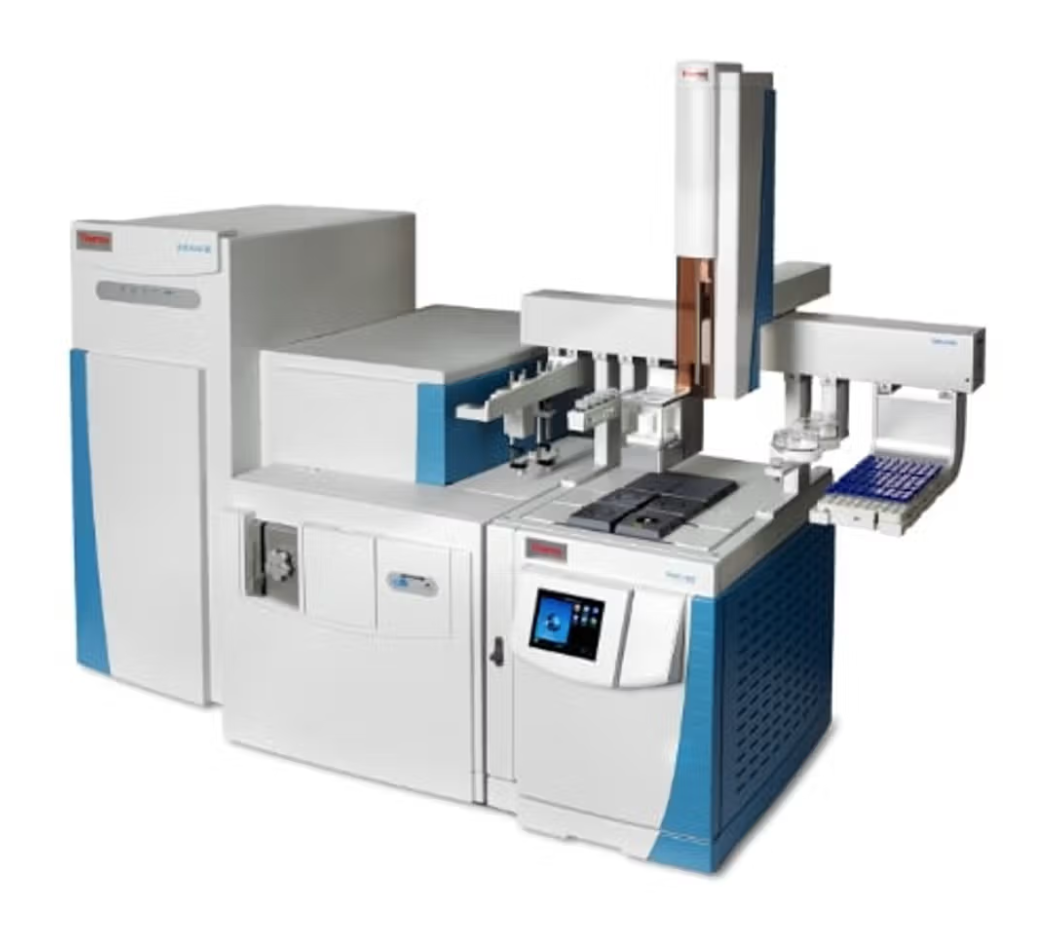
Thermo Scientific Q-Exactive Orbitrap Gas Chromatography/Tandem Mass Spectrometer
This instrument delivers high-resolution and accurate mass gas chromatography analysis. It's ideal for environmental, forensic, and industrial samples, with database matching for confident compound ID.

Perkin Elmer Nexion 5000 ICP-MS/MS
This tandem mass spectrometer delivers exceptional sensitivity and specificity for trace element analysis. It’s equipped with a fast autosampler and laser ablation for solid samples, supporting both research and regulatory needs.

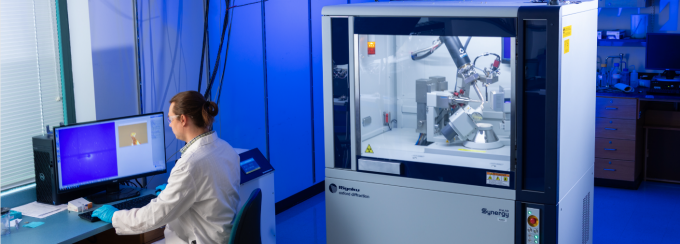
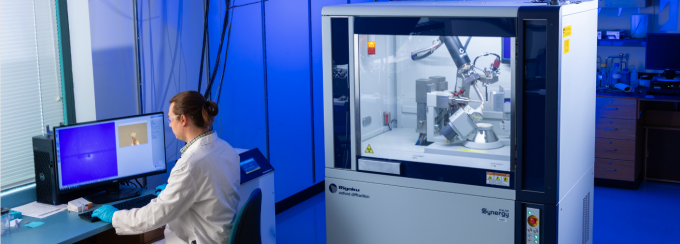
Rigaku XtaLAB Synergy-S
This dual-source single-crystal X-ray diffractometer collects high-resolution diffraction data—even from crystals smaller than 50 microns. It also supports powder diffraction and advanced applications like charge density and pair distribution function (PDF) measurements.

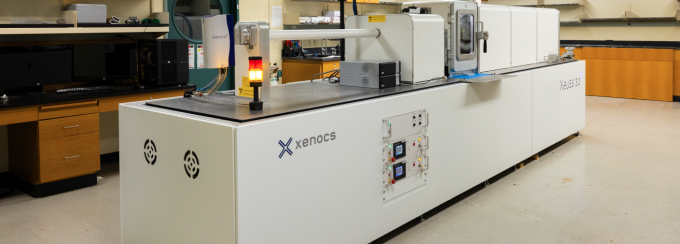
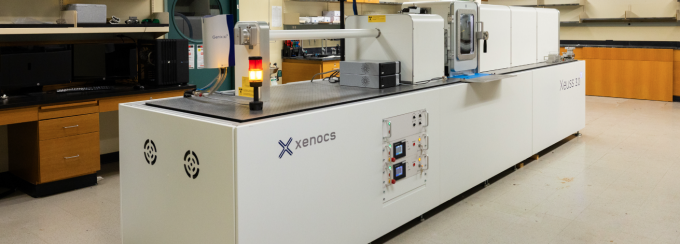
Xenocs Xeuss 3.0
This powerful system supports small- and wide-angle X-ray scattering (SAXS/WAXS), with capabilities for powders, films, gels, and solutions. It includes specialized attachments for bioSAXS, grazing incidence studies (GISAXS, GIWAXS), and variable temperature experiments.
If you're curious about how these tools power real-world research or want to explore a project of your own, our team is happy to help.
UBCIC Director
Dr. Valerie Frerichs
Director, Chemistry Instrumentation Center
📧 CHE-IC@buffalo.edu
XRD Specialist
Dr. Matthew Crawley
Research Assistant Professor
Department of Chemistry
University at Buffalo
Mailing Address
Department of Chemistry
Instrument Center
328 Natural Sciences Complex
120 Founders Promenade
University at Buffalo
Buffalo, NY 14260-3000