Recent News


Congratulations to our 2026 Neely Award Winner. Undergraduate student, Nikita Condlin, will study abroad at the University of Sydney.
Tesserae V6 Now Available in Public Preview
A major new version of Tesserae, the free web tool for discovering textual parallels in classical literature, is now available at: tesserae.caset.buffalo.edu. Founded in 2008 by Neil Coffee (UB Classics) and James P. Koenig (UB Linguistics), the project helps scholars trace how ancient authors borrowed from, alluded to, and echoed one another This kind of close intertextual reading that is fundamental to understanding classical literature but painstaking to do by hand across large bodies of work.
A reader of Vergil, for instance, can search the Aeneid against the full works of Ovid or Lucan and reveal hundreds of verbal and thematic connections in seconds, ranked by the strength of the match. The tool searches a corpus of more than 2,100 Latin, Greek, and English literary works spanning Homer to the Medieval period.
Version 6 is a complete rebuild of the platform. It combines nine complementary methods of detecting parallels to find connections that earlier versions would have missed. These include AI-powered semantic matching and syntactic pattern recognition. Scholars across classics, digital humanities, and computational linguistics have used Tesserae in published research on authors from Homer and Vergil to Augustine and Prudentius, and the project's methods were even cited in the Federal Second Circuit's Authors Guild v. Google decision. Tesserae V6 was developed by Neil Coffee, building on foundational work by Chris Forstall and a continuing collaboration with Walter Scheirer (Notre Dame), with support from the NEH, the Swiss National Science Foundation, the UB Humanities Institute, and the UB College of Arts and Sciences. The tool is free and open source.
Past News
Congratulations to our 2025 Neely Award Winner. Undergraduate student, Ash Ferguson, will study abroad at the University of Cardiff, Wales.
Congratulations to our 2024 Neely Award Winner. Undergraduate student, James Kottakis, will study abroad with the Lorenzo de Medici program in Florence, Italy.
Congratulations to our 2023 Neely Award Winners. Undergraduate student, Nolan Mattison, will attend the Monteverdi Field School of Italy and Graduate student, Joseph Miller, will attend the Paros Greek Epigraphy Seminar in Athens Greece.
Congratulations to our 2022 Neely Award Winner. Callodine Camodeca-Schmitz, Classics major, will be attending the Monteverdi Field School in Italy (May-June 2022).
Congratulations to our 2019 Neely Award Winner. Jake Pawlush, Classics major, will study abroad in Greece this summer.
Congratulations to our faculty on these recent achievements!
- Neil Coffee received at a $279,609 grant from the NEH Office of Digital Humanities, for Digital Humanities Advancement, for the project “Tesserae Intertext Service: Intertextual Search Access to Digital Collections in the Humanities” (2018-2020; co-directed with Walter Scheirer, Notre Dame)
- Carolyn Higbie was nominated as a finalist for the Runciman Book Award from the Anglo-Hellenic League, for her recent work, Collectors, Scholars, and Forgers in the Ancient World: Object Lessons (Oxford 2017)
- Alessandro Sebastiani received a $6,000 grant from the New York Community Trust for geophysical work to be conducted by the IMPERO (Interconnected Mobility of People and Economy along the River Ombrone) Project
- Roger Woodard will serve as a Fellow at the Institute for Hellenic Studies Washington, D.C. (Fall 2018)
Two Classics Majors Honored
- Zephyr Smith – Dean’s Outstanding Graduating Senior
- John Wasielewski – Outstanding Continuing Major
Neely Award Winner
Congratulations to this year’s Neely Award winner, Classics major Ashley Cohen. Ashley will study abroad in Farnese, Italy.
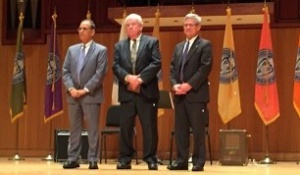
Congratulations to Stephen Dyson, SUNY Distinguished Professor
Stephen Dyson, Park Professor of Classics, was recently promoted to SUNY Distinguished Professor. Many of our graduate students attended the ceremony honoring him.


Classics Club
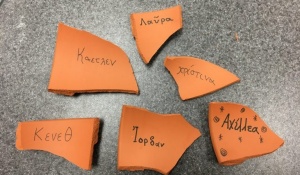
During the February 23 Classics Club meeting, the students made DIY Ostraka. Everyone wrote their names in Greek to recreate Classical Athens’ favorite method of banishing people.Thankfully, no one was banished from our club!

Fall Open House
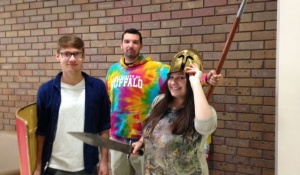
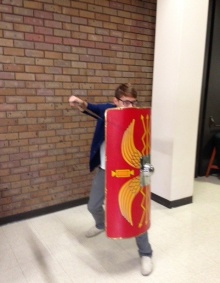
The Department of Classics participated in the University at Buffalo’s Open House for undergraduates. A few of our outstanding Classics majors (Ashley, John and Kenneth) were on hand to assist our Director of Undergraduate Studies, Prof. Carolyn Higbie.
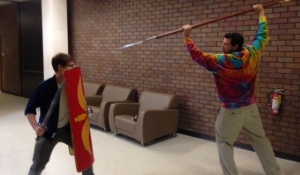

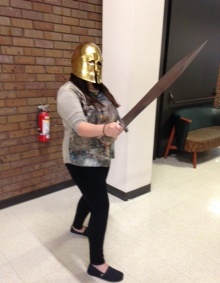



Four Classics Majors Honored
The department is pleased to announce the winners of this year’s academic awards:
- Elizabeth Hunter: Dean’s Outstanding Graduating Senior
- Ashley Cercone: Classics Department’s Outstanding Graduating Senior
- Kayleigh Reed: Classics Department’s Outstanding Continuing Major
- Kenneth Starr: Classics Department’s Outstanding Continuing Major
Congratulations to all of our students!
Neely Award Winners Announced
The department is very pleased to announce this year’s Neely Award winners. Each student received a cash award to defray the cost of participating in a noteworthy scholarly or educational activity.
- Elizabeth Hunter, a Classics undergraduate student, will study in Greece with Prof. Don McGuire.
- Caitlin Diddams, a Classics graduate student, will participate in the Digital Humanities conference in Krakow, Poland.
Congratulations to both students!
Remembering Professor George Kustas
We have received news that George Kustas, a former member of the Classics faculty has passed away. George Louis Kustas joined the faculty as an Assistant Professor in 1954. He was tenured in 1958 and became chair of the Department, holding the post until 1969. It was during his tenure as chair that UB became a SUNY institution, and Kustas was charged with the task of building the Classics faculty, increasing it from one or two regular faculty members to eleven between 1962 and 1969. Among his hires were Ernst Badian, Leendert Westerink, Jack Perodotto and Leo Curan.
College Ambassadors Announced!
The Department of Classics is very pleased to announce that six of our majors have been selected as College Ambassadors for the College of Arts and Sciences. College ambassadors are selected based on their academic achievement and involvement in campus and community activities. We are fortunate to have such excellent majors Congratulations to them all!

Ashley Cercone
Anthropology/Classics


Lydia Macaluso
Classics/Political Science

Caitlin Cole Conroy
Anthropology/Classics
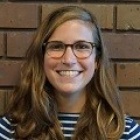

Bridget Murray
Anthropology/Classics
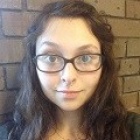

Libby Hunter
Classics


Kaleigh Reed
Classics/English
Three Classics Majors Honored
The department is pleased to announce the winners of this year’s academic awards.
- Jessica Micceri: Dean’s Outstanding Senior
- Theresa Mullin: the Classics department’s Outstanding Graduating Senior
- Bridget Murray: the Classics department’s Outstanding Continuing Major
Congratulations to each of these excellent students!
Neely Award Winner Announced
The department is pleased to announce that this year’s Neely Award winner is Ashley Cercone, a double major in Classics and Anthropology. Ashley will travel to Turkey to work on the Bronze Age pottery at Seyitomer Hoyuk, and then take part in the BAKOTA Field School in Hungary. Congratulations Ashley!
Neely Award Winners Announced
The department is very pleased to announce this year’s Neely Award winners. Each student received a cash award to defray the cost of participating in a noteworthy scholarly or educational activity.
- James Gawley, a graduate student focusing on classical languages and literature. James will participate in the Digital Humanities Conference in Lausanne, Switzerland.
- Michael McGlin, a graduate student focusing on Greek and Roman history. Mike will attend the Fifth International Summer Course in Greek and Latin Epigraphy at the Ohio State University.
- Kristin Slonsky, a graduate student focusing on Greek and Roman history. Kittie will attend the Fifth International Summer Course in Greek and Latin Epigraphy at the Ohio State University.
Congratulations to these deserving winners!
Undergraduate Award Winners Announced
The department is very pleased to announce the winners of this year’s undergraduate awards.
- Outstanding Graduating Student in Classics: Brian Ash, a student in our Mediterranean archaeology track.
- Outstanding Continuing Student in Classics: Emilie Redwood, a student in our classical language and literature track.
- College of Arts and Sciences Outstanding Senior in Classics: Lesley Crawford, a student in our Latin language and literature track.
Congratulations to these excellent students!
UB Alum Myles McCallum Finds Roman Armor in Farmer’s Field
Myles is a UB PhD and associate professor of Classics at St. Mary’s University in Halifax. He is looking for support to conserve a significant recent archaeological find. Here is his summary of the find: In early August of 2013 a team of survey archaeologists working in the territory of the town of Irsina (Basilicata, Italy) found on the ground in a plowed field pieces of a suit of bronze armor (greaves and a shield boss) dating to the fifth through late third century BC. The bronzes were transported to the archaeological superintendency of Basilicata where they await conservation, after which we hope that they will be put on display in the archaeological museum in Irsina. The funds required for conservation greatly exceed our annual conservation budget (during field survey one generally finds only broken tile and pottery which does not need to be conserved). The Italian ministry of archaeology, which would normally help pay for such conservation, is almost bankrupt due to severe budget cutbacks. Please help us preserve the cultural heritage of Italy. For more about the project in general, please visit:www.bvarp.com If you would like to contribute, you can do so here: http://www.gofundme.com/6wzgpo
Eat Like a Roman Discovery Seminar Teams with UB Dining for Roman Banquet Night!
Don McGuire and Martha Malamud are co-teaching a Discovery Seminar on Roman cooking and eating. Students learn about Roman food, dining habits, agriculture, and trade, but above all, they participate hands-on each meeting in preparing and cooking recipes from ancient Rome. In conjunction with the class, UB Dining is putting on a Roman themed dinner using ancient Roman recipes on April 6, 2014, open to all students on the dining plan. Students in the Discovery Seminar will do poster presentations at the banquet on various aspects of dining in the Roman World. Please join us!
Dana Fields Joins UB Department of Classics
The department is very pleased to announce the addition of Dana Fields to its faculty. Professor Fields is a scholar of Greek literature with a particular focus on the complex intersections between literary and political cultures during the Imperial Period. Before joining UB Classics, professor Fields taught at Birkbeck, University of London and at Columbia University as a Mellon Research Fellow. Welcome to UB Classics Professor Fields!
Beginning of the Year Party
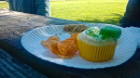
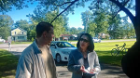
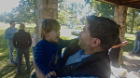
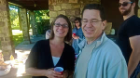
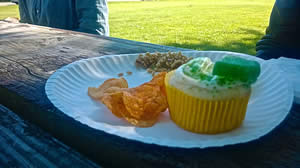
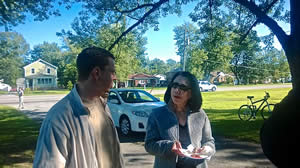
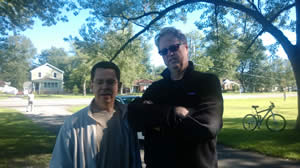
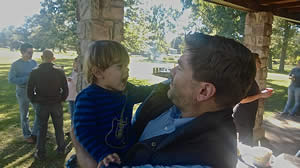
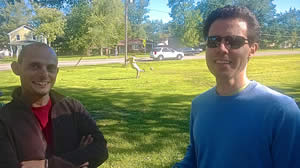
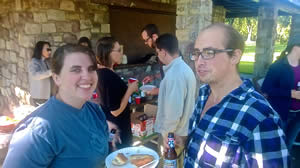
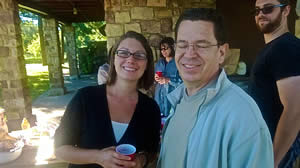
The department held its beginning of the year party on Saturday, Sept. 14 at the Ellicott Creek Park. The weather cooperated beautifully and provided an excellent opportunity for faculty and students to welcome in the new academic year.



Neely Award Winners Announced
The department is pleased to announce that Alexander Mazurek (graduate student) and Elisabeth Hauser (undergraduate student) have won the 2013 Neely Award. Alexander used his prize money to attend the American School of Classical Studies at Athens. Elizabeth used her prize money to participate in the 2013 Hassloch excavation. Congratulations to Alexander and Elisabeth!
Undergraduate Awards Announced
The department is pleased to announce the winners of the Undergraduate Awards for 2013. Katie Roache won the College of Arts and Sciences “Outstanding Senior in Classics.” Jessica Micceri won the “Outstanding Continuing Student in Classics.” Anna Glenn won the “Outstanding Graduating Student in Classics.” And both Tony Waleszczak and Eric Militello won the “Distinguished Service Award.” Congratulations to each of these deserving students!
Remembering Robert K. Sherk, 1920-2012
The department is sad to report that Professor Emeritus Robert K. Sherk has died. Professor Sherk was a towering figure in Hellenistic and Roman history and epigraphy. He is perhaps best known for his Roman Documents from the Greek East (Johns Hopkins 1969) and Municipal Decrees of the Roman West (Buffalo 1970). Professor Sherk was a member of UB’s Classics department from 1962 until his retirement in 1990. UB PhD Tom Banchich, Professor of Classics at Canisius College, and PhD alumna Phyllis Culham have offered their remembrances. Both testify beautifully to the character and accomplishments of Professor Sherk and his importance to the UB Classics tradition.
Award-Winning Article Published by Arethusa
We are pleased to report that the Women’s Caucus of the American Political Science Association has awarded professor Bonnie Honig of Northwestern University the Okin-Young award for her article “Ismene’s Forced Choice: Sacrifice and Sorority in Sophocles’ Antigone.” The Okin-Young award recognizes the year’s best article in feminist theory. Congratulations Professor Honig. And kudos to Arethusa for publishing such innovative, interdisciplinary scholarship!
The Department Holds First Annual Classics Day
On Friday, May 4, the department held its first annual Classics Day celebration – an event for members of our department to demonstrate both their sense of humor and love of the Classics. Highlights included “Ask Dr. Asc”, “Who Wants to be a Senator?”, and the opportunity for everybody to write his or her own curse tablet. Thanks to Professor Boyd for organizing such an entertaining end-of-the-year celebration!
"The Ancient World and the Movies"
A new course introduced by the Department of Classics this year is getting great advance reviews. Professor Donald McGuire, Jr. introduces his course “The Ancient World and the Movies” for fall 2012.
Graduate Student Conference Call for Papers
October 20, 2012
Exegi Monumentum Aere Perennius: Self-Promotion in the Ancient World
Department Welcomes 2010-2011 IEMA Fellow
The Classics Department is pleased to welcome Dr. Carrie Murray as the 2010-2011 IEMA Fellow. Dr. Murray holds a BA in anthropology and archaeology from The University at California at San Diego and a PhD from University College London. Her doctoral research was on central Italy of the 8th-6th centuries BCE. Dr. Murray will be organizing a conference for IEMA in her area of research and participating in IEMA and Classics Department activities.
Graduate Student Accomplishments
Rhodora Venarucci, PhD student in the Classics Department, has won the 2009-10 Excellence in Teaching Award from the UB Graduate School. The award recognizes her outstanding teaching for the department. Dora has also won a teaching position for the Intercollegiate Center for Classical Studies at Rome, which she will begin in fall 2010.
Classics PhD student Katie Lamberto has won the Lucy Shoe Meritt Fellowship to become a regular member of the American School of Classical Studies at Athens for 2010-2011.
Congratulations to Dora and Katie!
Professor David Teegarden wins Loeb Fellowship
Assistant Professor of Classics David Teegarden has won a prestigious Loeb Foundation Fellowship to support a year off from teaching for research on his book project on tyrant killing and anti-tyranny legislation in the classical Greek city-state. Professor Teegarden will be taking his fellowship in the 2010-2011 academic year.
PhD Student Massimo Betello Wins Graduate School Excellence in Teaching Award
Massimo Betello, PhD student in the Classics Department, has won the 2008-9 Excellence in Teaching Award from the UB Graduate School. The award is a deserved tribute to his diligent preparation, clarity of thought, and good humor, which are evident in and out of the classroom. Euge!
Catherine Nicastro Honored with SUNY Chancellor’s Award for Student Excellence
Classics major Catherine Nicastro has achieved a notable distinction by winning the 2008-2009 SUNY Chancellor’s Award for Student Excellence. The Award acknowledges exemplary students and is the highest honor bestowed upon a SUNY student. Last year, 275 students from 62 SUNY campuses were recognized, including fifteen from UB. In addition to an impressive array of co-curricular accomplishments, the recipients had an average GPA of 3.75. One of the achievements recognized by the award is Catherine’s leadership in the classics department, where she helped found the Classics Club and serves as its President. The department is delighted that she plans to continue with classics by training as a Latin teacher. Congratulations Catherine!
David Teegarden Welcomed as Assistant Professor of Classics
David Teegarden, PhD has joined the department as a historian of ancient Greece specializing in the political life of ancient Athens. He received his PhD from Princeton University in 2008 with a dissertation examining how laws and social structures affected the possibilities for political and communal action at Athens and elsewhere in classical Greece. Professor Teegarden will be teaching courses in Greek language, history, and literature.
New Graduate Students: James Artz, Laura Berger, Sarah Jacobson
The department welcomes three graduate students in fall 2008. James Artz holds a BA from the University of Michigan in History and Latin, and an MA from Tufts University in Classical Archaeology. He is interested in ancient Greek archaeology, social and economic history, and historiography. Laura Berger holds a B.A. in Classics from the University of Puget Sound and an MA in Classical Archaeology and Ancient History from the University of Glasgow, and her interests lie in Roman archaeology. Sarah Jacobson holds a BA in Classics and Spanish from Hendrix College and an MA in Classics from the University of Arizona. She plans to concentrate on the study of Latin literature.
First Conventiculum Buffaloniense a Success
The UB Classics Department hosted the first ever Conventiclum Buffaloniense, a weekend workshop on spoken Latin, from June 27-29, 2008. Some thirty participants came from as far afield as Arizona and Virginia to practice communication in Latin, and explore how this practice can lead to a deeper understanding of the culture of Latinity and more dynamic Latin instruction. After this successful start, plans are developing to host the Conventiculum again in summer 2009.
Undergraduate Awards Announced
The Department of Classics is pleased to announce its undergraduate award winners for the 2007-8 academic year. Leslie Feldballe has been awarded the College of Arts and Sciences Dean’s Outstanding Senior Award. Gabriel Malone is the Classics Department Outstanding Graduating Senior, and Catherine Nicastro is our Outstanding Undergraduate. Congratulations to all three, and please join us to celebrate their achievements and a great end to the year at the Undergraduate Awards Presentation & Reception on Tuesday, April 29, 2008, at 2:00 p.m., in the departmental seminar room (Academic Center 343).
International Conference in Honor of T. Peña’s Work on Roman Pottery
On June 20-22, 2008, a conference will be held at the Danish Institute in Athens devoted to discussion of the recently published book of Associate Professor and Chair T. Peña, Roman Pottery in the Archaeological Record (Cambridge, 2007). The conference, titled Pottery in theArchaeological Record: A View from the Greek World, is being organized by John Lund of the National Museum of Denmark and Mark Lawall of the University of Manitoba. It will bring together several specialists in pottery analysis working in the eastern Mediterranean to discuss the book’s implications for their work. Professor Peña will deliver the keynote address.
Graduate Students Win Prestigious Fellowships
UB Classics graduate students continue their record of winning prestigious fellowships with three outstanding awards for the 2008-2009 academic year. Panagiota Pantou has won the Ione Mylonas Shear Fellowship in Mycenaean Archaeology for her continued study at the American School of Classical Studies at Athens. Scott Gallimore has been admitted as a Regular Member to the American School. Matt Notarian was awarded a coveted Arthur Ross Pre-Doctoral Rome Prize for his project “Civic Transformation in Early Imperial Latium,” giving him an 11-month fellowship at the American Academy in Rome beginning in September 2008. And Theodora Kopestonsky has won a UB Humanities Institute Dissertation Fellowship for the 2008-2009 academic year.
Graduate Student Scott Gallimore Awarded UB Teaching Prize
Scott Gallimore, a PhD student specializing in Roman archaeology, has won a Graduate Student Excellence in Teaching Award in the 2007-8 competition held by the UB Graduate School. The prize acknowledges that Scott is among the very best graduate student instructors on campus.
Graduate Students Have Banner Year
The Department’s graduate students had a banner year in 2006-2007, registering an unprecedented number of achievements in a variety of areas:
Employment
Four recent PhDs and one ABD student landed faculty positions at institutions in the U.S., Canada, and Turkey:
- Jason Banta (PhD, 2006) obtained a position as Visiting Assistant Professor in the Department of Classics at the University of Notre Dame, South Bend Indiana.
- Jeanette Cooper (ADB; Ph.D. expected 2007) obtained a position as Visiting Assistant Professor in the Department of History at Whitman College, Walla Walla, Washington.
- Paul Kimball (PhD, 2004) obtained a position as Instructor in the Program in Cultures, Civilizations, and Ideas at Bilkent University in Ankara, Turkey.
- Myles McCallum (PhD, 2004) obtained a position as Assistant Professor in the Department of Modern and Classical Languages at Saint Mary’s University, Halifax, Nova Scotia.
- Jon Strang (PhD, 2007) obtained a position as Assistant Professor in the Department of Classics at Trent University, Peterborough, Ontario.
Pre-Doctoral Fellowships
Four graduate students won prestigious pre-doctoral fellowships to support their dissertation research for the 2007-2008 academic year:
- Benjamin Costello won a Fulbright Fellowship for the Republic of Cyprus.
- Theodora Kopestonsky won the Spitzer Fellowship at the American School of Classical Studies in Athens.
- Panagiota Pantou won the Emily Vermeule Fellowship at the American School of Classical Studies in Athens.
- Rachel Van Dusen won the Rome Prize/Kress Fellowship for the American Academy in Rome.
Conference
The graduate students hosted a highly successful conference “Religious Authority in the Ancient Mediterranean” on Saturday, March 31, 2007 with Robert Garland, of Colgate University delivering the keynote address and papers by graduate student from the University of Chicago, Johns Hopkins University, the University of Florida, Cornell University, New York University, McGill University, and the University at Buffalo. The conference organizing committee was composed of Jennifer Kendall, Elizabeth Poyer, Scott Soboleski, and Rachel Van Dusen.
Summer programs
Five graduate students gained admission to prestigious summer programs for Summer, 2007:
- Meagan Ayer and Joey Williams gained admission to the American Academy in Rome Summer Program in Roman Pottery.
- Rebecca Cefaratti gained admission to the International Summer Course in Greek and Latin Epigraphy to be held at The Center for Epigraphical and Palaeographical Studies at Ohio State University.
- Will Duffy and Katie Lamberto gained admission to the Center for Hellenic Studies Summer Program “The Iliad in the Second Millennium BC.”
Undergraduate Award Winners
The following are the Department’s three undergraduate award winners for the 2006-2007 academic year:
- William Seychew: Dean’s Award for Outstanding Graduating Classics Major.
- Anne Gullotti: Outstanding Graduating Scholar.
- Elizabeth Hong: Outstanding Continuing Major.
Susan Cole Retiring
Susan Cole has announced her retirement effective the end of the Fall, 2007 semester. Professor Cole, a major figure is the field of ancient Greek religion, joined the Department in 1992, serving as Director of Graduate Studies for the period 1992-1998 and Chair for the period 1998-2004.
Roger Woodard Receives Book Award
Roger Woodard has received a CHOICE Outstanding Academic Title award for his book The Cambridge Encyclopedia of the World’s Ancient Languages (Cambridge, 2004).
Faculty Publication
Over the past year members of the faculty have published three new books:
- Dyson, Stephen. 2006. In Pursuit of Ancient Pasts. Yale University Press. 336 pp. (ISBN: 9780300110975; ISBN-10: 0300110979)
- Peña, J. Theodore. 2007. Roman Pottery in the Archaeological Record. Cambridge University Press. 448 pp. (ISBN-13: 9780521865418)
- Woodard, Roger. 2006. Indo-European Sacred Space. University of Illinois Press. 312 pp. (ISBN 0-252-02988-7)