Minor in American Sign Language (ASL)

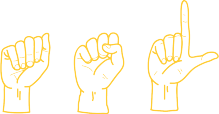


Learn a visual language and engage with Deaf culture
American Sign Language (ASL) is a complete, natural language with its own grammar, structure and cultural context. At the University at Buffalo, the ASL minor gives you the opportunity to build communication skills while learning from Deaf faculty in an immersive environment.
A fully immersive learning experience
ASL classes at UB are taught by Deaf instructors and conducted entirely in ASL, helping you build real-world communication skills from day one.
This minor is a strong fit if you want to expand your communication skills, explore language in a different modality or engage with Deaf culture and community.
With this minor, you will:
- Learn to communicate in ASL across a range of real-world situations
- Understand how ASL is structured, including grammar and visual expression
- Explore Deaf culture, history and community
- Build skills in observation, interpretation and nonverbal communication
- Strengthen critical thinking and cultural awareness
ASL pairs well with many majors, especially in:
- Communication
- Health and human services
- Psychology
- Public health
- Speech and hearing science
- Theatre
- Education and social services
What makes this program different
ASL is not a signed version of English. It is a unique language with its own structure and cultural context.
At UB, you will:
- Learn in a fully immersive, visually rich environment
- Study with Deaf faculty and instructors
- Explore ASL as both a language and a cultural system
- Gain insight into the experiences and perspectives of Deaf communities
This approach helps you build both language proficiency and cultural understanding.
The ASL minor includes a sequence of language courses along with coursework in Deaf Studies and linguistics.
You will:
- Progress through a sequence of language courses from introductory to advanced levels
- Take Introduction to Deaf Studies
- Complete additional coursework in ASL or related areas such as linguistics
A flexible starting point
Your starting level depends on your prior experience with ASL.
- Students with no experience begin with introductory courses
- Students with prior experience may place into higher-level courses
- Placement may be based on previous coursework or demonstrated proficiency
You will develop communication skills along with linguistic and cultural knowledge.
You will:
- Communicate in ASL across a range of contexts and topics
- Use core grammatical features such as classifiers, spatial structure and non-manual signals
- Initiate and sustain conversations in ASL
- Understand key concepts in Deaf Studies and ASL linguistics
- Analyze ASL as a language, including structure and use
- Recognize ASL literature and cultural expression
- Understand social and cultural issues affecting Deaf communities
An ASL minor can support a wide range of career paths that involve communication, community engagement and public service.
Students may pursue work in:
- Health care and human services
- Education and support services
- Community and nonprofit organizations
- Communication and public-facing roles
This minor can also prepare you for further study in ASL-English interpreting or related graduate programs.
Note:
The ASL minor does not lead directly to interpreter certification but provides a strong foundation for advanced training.
If you want to build communication skills in a visual language and engage with Deaf culture and community, the ASL minor offers a meaningful and practical path.


