Meet Our Students
Graduate Students
1. “What drew you to UB?”
Julie Park: The economics department at UB is well known for its strength in applied economics, particularly in empirical analysis. During my one and a half years working as a Research Assistant, I realized how powerful empirical analysis can be in providing strong evidence for theoretical ideas or models. I believe UB will help me not only develop ideas but also verify them using rigorous and standardized methods.
Muiz Olasupo: The depth of UB’s research environment, the accessibility of the faculty, and the program’s strong quantitative training drew me here. I wanted a place where I could challenge myself technically while also receiving thoughtful mentorship, and UB offered that balance immediately.
Tolulope Olurotimi:I was initially attracted to UB because of the strength of its Economics program and the department’s reputation for supportive mentorship. I hoped to find an environment that offered real academic rigor and the chance to work with faculty whose research aligned with my interests.. After joining, that impression only deepened. The sense of community and the openness of the department made UB feel like the right place for my PhD.
2. “What led you to becoming interested in the field of Economics? Is there a specific sub-field you find particularly thought-provoking?”
Julie Park: Economics is very unique that it perceives social phenomenon with scientific lens. It provides a tangible tool to analyze society and offer evidence-based reasoning. This scientific approach deeply attracted me to the field.
Within economics, I am particularly interested in Antitrust, law and economics, monetary economics, and information asymmetry. Since I’m a first year PhD student, I’m expecting to experience more fields and figure out which fields fit best for me.
Muiz Olasupo: My interest in Economics grew from wanting to understand how policy, incentives, and real-world constraints shape human behavior. Over time, I gravitated toward applied microeconomics—especially causal inference, labor, and development—because they allow me to combine rigorous empirical tools with questions that have direct relevance for people’s lives and societal outcomes.
Tolulope Olurotimi:Economics first caught my attention when I realized how much our everyday decisions and public policies quietly shape the world around us. Over time, that curiosity expanded into a deeper fascination with microeconomic theory and intertemporal decision-making, especially how incentives and constraints play out over time. I’m also increasingly drawn to environmental economics, because it brings together individual behavior, long-term planning, and real-world challenges in a way that feels both urgent and meaningful. It’s a field where the theory connects directly to issues that matter, and that makes the work feel purposeful.
3. “Where do you hope to see your academic experience take you in the future?”
Julie Park: I hope to pursue a career in academia or a governmental organization. From a young age, I’ve always wanted to make a positive impact on society, and I see economics as a mean to do that. My goal is to develop innovative ideas that balance efficiency and equity. This aspiration drives my interest in working in academia or public institutions where I can contribute such economic insights.
Muiz Olasupo: I hope for my academic experience to open pathways in both academia and industry. On the academic side, I want to engage in research that advances applied micro, labor, and development economics. In industry, I see myself applying rigorous causal inference and analytical tools to real-world policy and organizational decisions. Ultimately, I want a career that allows me to produce impactful research while also contributing solutions beyond the university setting.
Tolulope Olurotimi:I hope to use my academic training to do research that can inform policy and address real economic challenges, especially in developing economies. In the future, I see myself working in government or industry, where I can apply economic ideas to practical decisions while still staying active in research and writing. I want a career that allows me to contribute to meaningful policy conversations and produce work that can make a real difference.
Meet all our current Phd students.
Undergraduate Students
Meet our Economics major students and the department's current College Ambassador. College Ambassadors are outstanding students nominated by their department to represent the department at campus and community events.


Claire Summerell
Claire Summerell
I enrolled at UB as an economics major because I have always been fascinated by the relationships between countries, businesses, governments, and individuals. Economics aims to explain these relationships objectively by analyzing human behavior (decision-making) through quantitative methods. It allows me to understand the way the world works as well as our role within it. Although I do not yet have firm plans concerning my graduate field of study, I appreciate that my economics major has allowed me to explore data analysis, applied mathematics, and economic theory while still maintaining a social and human focus.


Abiman Thayaparan
Abiman Thayaparan, Economics
I chose economics because it provides a strong foundation for understanding policy decisions at the national level, while also serving as a framework for analyzing how individuals and businesses make rational choices.
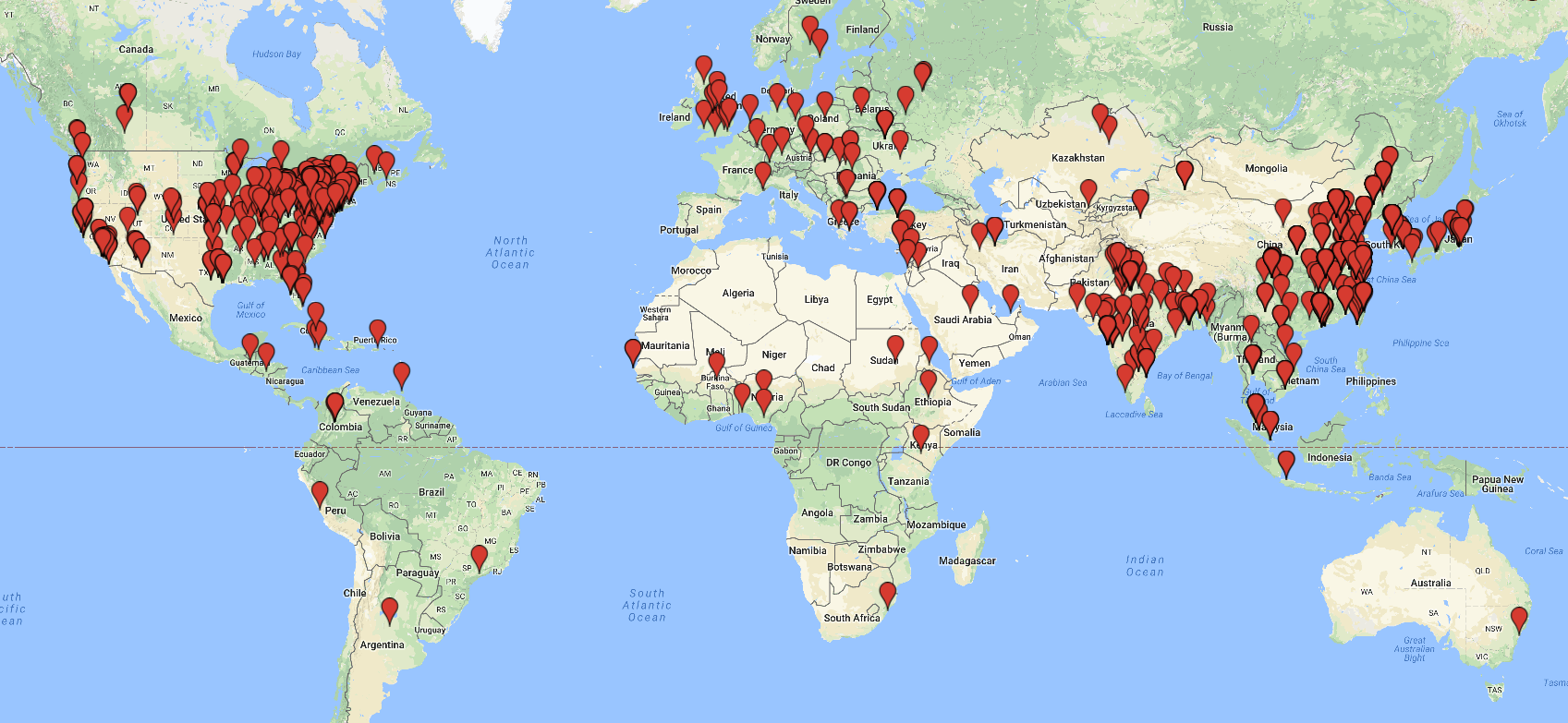
Our Students Cover the Globe!
The Department of Economics has a long-standing commitment to diversity. We welcome students from near and far, and believe that our programs are strengthened by a wide variety of experiences, cultures and educational goals.