Graduate History Association
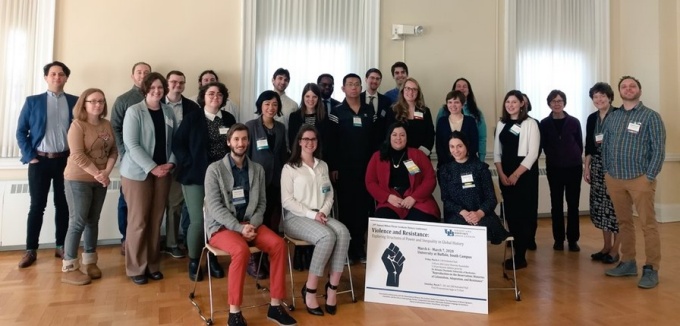
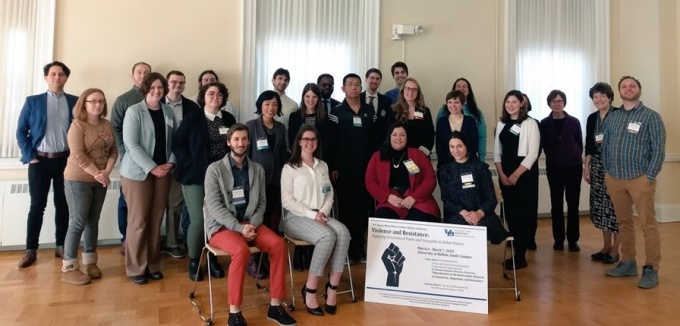
A community that supports your work and your well-being
Graduate study is demanding. The Graduate History Association (GHA) helps make it sustainable.
The GHA strengthens both intellectual life and community. Through academic programming and peer connection, the association supports students as scholars, teachers and colleagues.
The GHA is a graduate student organization dedicated to improving the experience of history graduate students at UB. It creates space for collaboration, conversation and mutual support across cohorts and programs.
The GHA works to:
- Encourage critical historical and interdisciplinary engagement
- Build connections among graduate students
- Support a healthy and collaborative teaching and learning environment
- Help students navigate and succeed throughout their graduate careers
Graduate students play an active role in shaping department culture, professional development opportunities and community life.


President
Jessica Sullivan
jgsulliv@buffalo.edu


Treasurer
Leesi Poromon
leesipor@buffalo.edu
The GHA Executive Board officers manage group funds, plan events, update the GHA website, maintain transparent communications with GHA membership, and foster partnership and communication with the Department of History faculty and the UB Graduate Student Association. GHA officers are elected representatives. Elections are held at the end of the spring semester each academic year, and all graduate students in the Department of History is encouraged to run for office. Further information can be found in the GHA Member Standards.
While officers provide guidance for the direction of GHA, all motions concerning event planning, the spending of GHA funds, and representing our community must be passed by a majority vote during GHA meetings.
The GSA Board of Directors is the elected body that manages and allocates the activity fees paid by all registered graduate students at the university. As a recognized member organization of the GSA, the GHA has the right and obligation to have at least one board member elected by GHA membership at every Board of Directors meeting to maintain good standing.
Board Members, 2026-2027
- Primary Member: Alyssa Martin
GHA members serve on committees within the history department to ensure that graduate student voices are heard in departmental operations. These representatives are elected by popular vote during a membership meeting which meets quorum (ten members).
Committee Representatives, 2025-2026
- Faculty Committee: Alyssa Martin
- Speakers Committee: Fernando Jauregui
- Diversity Committee: Kevin Kostin
- Graduate Student Council Committee: Jenna Labbie