What is Media Study?
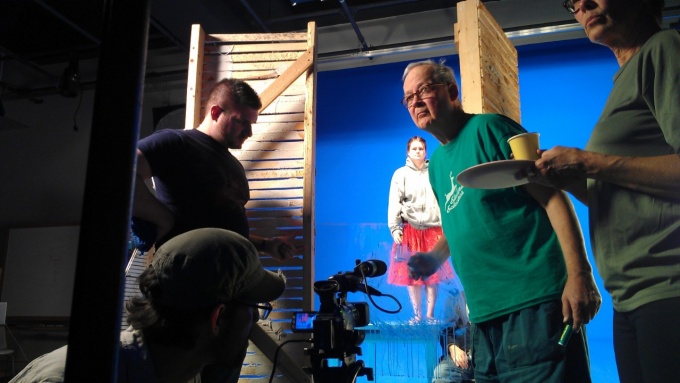
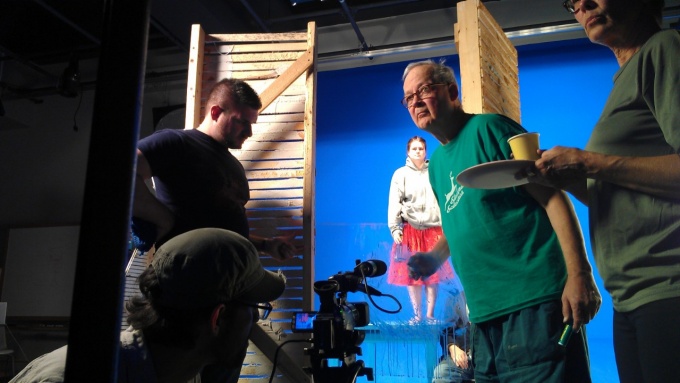
Tony Conrad’s graduate-level Advanced Video Production (2013), photo by Matt McCormick
Understanding how media shapes the world
Media Study examines how images, sound and digital systems create meaning. It explores how media is produced, distributed and experienced, and how it shapes culture, politics, identity and everyday life. The field brings together creative practice and critical analysis. Students learn to make media while also studying how it works, who it serves and how it influences society.
Media Study asks questions such as:
- How do moving images construct reality?
- What role does sound play in shaping perception?
- How do digital platforms change communication?
- How do new technologies redefine storytelling?
It is both creative and analytical. It looks backward at the history of film and electronic media while also examining emerging technologies such as virtual reality, computational systems and interactive environments.
Students learn to move between creating media and critically examining it. They explore artistic innovation alongside social and cultural impact.
Media Study as an academic discipline began at the University at Buffalo.
In 1973, Gerald O’Grady founded one of the first university programs devoted specifically to media art. At a time when few institutions recognized film, video and electronic media as serious intellectual and artistic practices, UB became a center of innovation.
Faculty including Hollis Frampton, Tony Conrad, Paul Sharits, Woody Vasulka and Steina helped shape the early development of experimental film and video. They were not only practicing artists, but theorists who examined the cultural and technological questions raised by their work. They established one of the first Digital Arts Laboratories in the country and helped define the terms of the emerging field.
Their influence extended far beyond Buffalo, contributing to the rise of video installation art and digital media practices in the decades that followed.
Today, Media Study continues that spirit of experimentation while expanding into new areas.
The field includes:
- Film and moving image studies
- Sound art and media theory
- Computational and interactive media
- Game design and digital systems
- Media networks and environments
Research methods are interdisciplinary and may be:
- Historical
- Theoretical
- Conceptual
- Practice-led
- Practice-based
Media Study prepares students to understand how media systems function and how creative work shapes public life.
Media shapes how societies understand themselves. It influences public discourse, cultural memory and technological change.
Studying media provides tools to:
- Think critically about representation and power
- Understand the systems behind digital platforms
- Create new forms of artistic expression
- Respond thoughtfully to technological change
Media Study is not only about mastering tools. It is about understanding how those tools shape the world.
A Media Study degree prepares you for creative, technical and analytical careers across industries.
Graduates have pursued roles such as:
- Assistant producer
- Augmented reality engineer
- Digital marketer
- Editorial producer
- Film director
- Game developer
- Production coordinator
- Professor
- Videographer or video editor
- Web developer
Media skills translate across film, broadcasting, digital media, cultural institutions, education and emerging technology fields.
To see how this field comes to life at the University at Buffalo.