Emerging Media
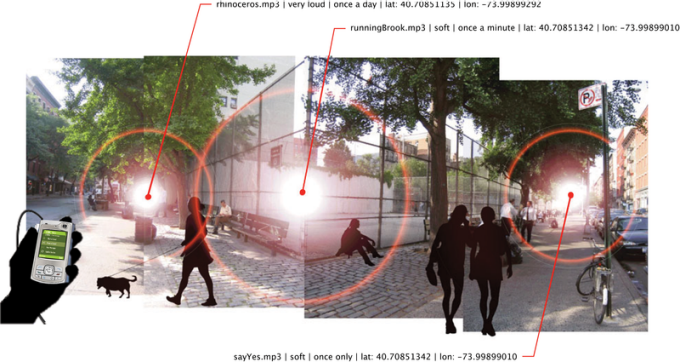
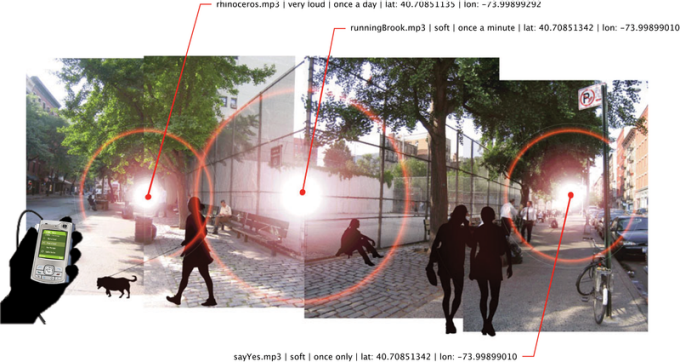
Tactical Sound Garden (Mark Shepard, 2006)
Learn how technologies transform our spaces
Emerging Media research in the Department of Media Study at the University at Buffalo explores how new technologies transform public space, communication and creative practice. Faculty and students investigate mobile, embedded and networked media systems while critically examining their cultural and political impact.
This is hands-on, practice-based research grounded in real-world technologies and social questions.
Emerging Media Practices focus on how digital systems operate in physical space and everyday life. Research explores responsive artifacts, wearable technologies, spatial media interventions and ad-hoc communication infrastructures.
Students and faculty examine both the possibilities and the hidden agendas of emerging technologies. Projects ask how computational systems shape power, access, mobility and interaction. Work is collaborative, interdisciplinary and often crosses boundaries between art, design, engineering and theory.
Great for students interested in:
- Physical computing and creative coding
- Wearable and embedded technologies
- Spatial and site-specific media
- Networked systems and infrastructure
- Socially engaged design
- Interdisciplinary art and technology
Research in Emerging Media asks questions such as:
- How do mobile and networked systems reshape public space?
- What social and political values are embedded in digital infrastructures?
- How can artists and researchers intervene in technological systems?
- What happens when media becomes ambient, wearable or invisible?
- How can experimental design imagine alternative technological futures?
These questions connect technical experimentation with cultural awareness.
Emerging Media research is practice-led and experimentally driven. Faculty and students design and build responsive systems, prototype spatial installations and analyze the social contexts in which technologies operate.
Methods may include:
- Physical computing and sensor-based systems
- Creative coding and interactive installation
- Networked and mobile media design
- Spatial mapping and site-specific interventions
- Critical analysis of technological infrastructure
Projects often combine technical development with theoretical reflection, resulting in installations, performances, prototypes and scholarly writing.
Emerging Media research commonly explores:
- Mobile and pervasive computing
- Embedded and wearable systems
- Responsive environments and spatial media
- Networked communication infrastructure
- Experimental and interdisciplinary design
- Critical approaches to technology and society
Together, these approaches position media as something lived, built and questioned in real space.
Connects naturally to
Games and virtual reality, electronic literature, sound art, digital humanities, architecture, art and design, computer science and social theory.


Affiliated Research Centers
These centers expand opportunities for collaboration across art, science and technology.
Students can join interdisciplinary teams, develop experimental installations and test new media systems in real environments. They build technical fluency alongside critical thinking and collaborative skills.
These experiences prepare students for careers in interactive design, creative technology, media art, research and advanced graduate study.