What is Romance Languages and Literatures?

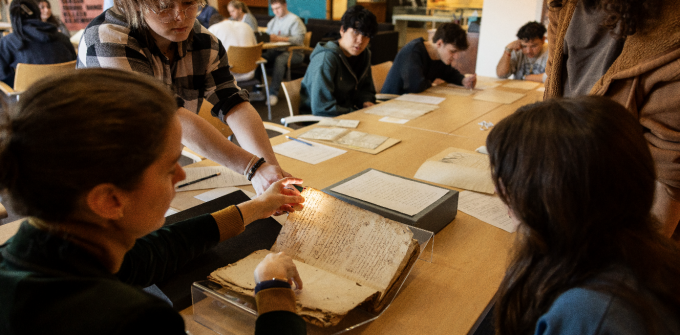
Understanding language, culture and human connection
Romance Languages and Literatures (RLL) explores how people communicate, create meaning and share ideas across cultures and generations. At the University at Buffalo, students and scholars study language, literature, film, media, history and cultural traditions connected to French, Italian, Spanish, Portuguese, Catalan and Haitian Creole. Together, these areas help us understand how language shapes identity, communities and the way people experience the world.
Romance Languages and Literatures is about more than learning vocabulary and grammar. It explores the stories, histories and cultural traditions that languages carry with them.
Students and faculty examine questions such as:
- How do languages change over time?
- How does language shape identity and belonging?
- How do literature, film and media reflect cultural values?
- How do communities preserve traditions while adapting to social change?
- How do languages connect people across countries and generations?
Courses may explore topics such as language and society, literature, film, migration, cultural history and global communication.
Students learn in small classes where conversation, discussion and collaboration are central to the experience. Language study is combined with cultural exploration, allowing students to develop communication skills while gaining a deeper understanding of the people and communities who speak these languages.
What stands out about the UB experience:
- Small, discussion-based classes
- Close interaction with faculty mentors
- Opportunities to study multiple languages
- Connections between language, literature, history and culture
- A welcoming academic community built around shared curiosity and global perspectives
Students are encouraged to ask questions, engage with different viewpoints and make connections across disciplines.

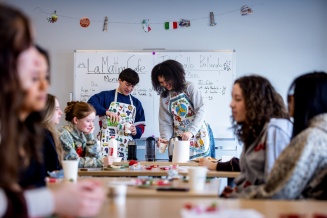
Language you can taste
Studying language is about more than words. Some language and culture courses bring learning into the community through visits to local restaurants, bakeries and international grocery stores. Students may also prepare and sample traditional foods while exploring the cultures, histories and traditions behind them.
Language and cultural study become more meaningful when students apply what they learn in real-world settings.
Students may participate in:
- Study abroad experiences
- Community-based learning
- Translation and interpretation projects
- Faculty-led research
- Internships connected to language and culture
These opportunities help students strengthen language skills while gaining practical experience and global perspective.
Studying languages and cultures develops skills that are valuable in many careers. Graduates learn to communicate effectively, think critically, adapt to new situations and work across cultural boundaries.
Students often pursue careers in:
- International business
- Education
- Translation and interpretation
- Government and public service
- Nonprofit and community organizations
- Media and communications
- Law and diplomacy
- Graduate and professional study
Many students also combine language study with majors in business, engineering, health sciences, education, social sciences and the humanities.
Whether you want to communicate across cultures, explore global perspectives or deepen your understanding of language and society, Romance Languages and Literatures offers a powerful way to connect your interests to the wider world.