Meet Our New Faculty
The College of Arts and Sciences is excited to welcome new faculty to the university. Our new faculty will amplify the College's academic and research strengths.
Fall 2026

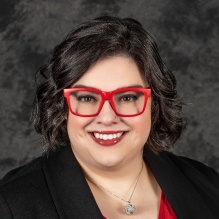
Clinical Associate Professor
Department of Communicative Disorders and Sciences
Fulcher's scholarly interests focus on augmentative and alternative communication; culturally and linguistically responsive assessment and intervention; clinical decision-making; and implementation science and clinical education. Her work bridges research and clinical practice to improve communication access, evidence-based decision-making and person-centered care for individuals with complex communication needs across the lifespan.

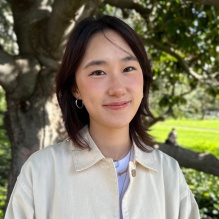
Claire Chun
Assistant Professor
Department of English
Claire Chun’s research broadly explores how modern conceptualizations of “Korean” and “Asian” beauty, wellness, and aesthetics are shaped by overlapping forces of U.S. militarism, tourism and humanitarianism. Her research interests include visual art and culture; transpacific Asian American studies; critical beauty studies; diaspora studies; disability studies; materiality studies; and queer and feminist theory.

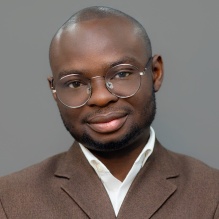
Theophilus (Theo) Okunlola
Assistant Professor
Department of English
Okunlola is a literary scholar whose research and teaching interests engage the intersections of global Black literary and cultural studies, disability studies, medical humanities and cultural memory. His current research examines how foregrounding constructions and representations of disability in African and African diaspora literary, cultural and political texts reframes interpretations of embodiment, visibility and invisibility and transnationalism.

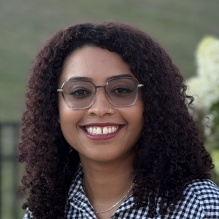
Danielle LaPlace
Assistant Professor
Department of Global Gender and Sexuality Studies
LaPlace is a researcher whose work foregrounds undertheorized disability histories of the Global South. Her current research explores public health as a site of racialization in the transnational historical context of early twentieth century U.S. imperial expansion across the Greater Caribbean. Centering gendered Black labor in U.S-controlled sites, this project examines how disability is intertwined with the objectives of empire and the hierarchical structures of colonialism.

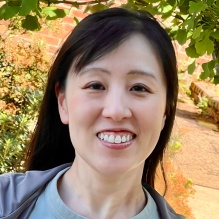
Lecturer
Department of Linguistics (Japanese)
Before entering the field of language education, Okano worked in the television industry in Japan, where she developed an interest in communication across languages and cultures through media production and subtitle translation. She received her M.A. in Language Teaching Studies from the University of Oregon. Her research interests include second language acquisition, L2 emotions, identity, learner development and Japanese language education.

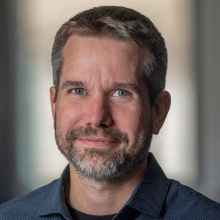
Empire Innovation Professor
Department of Psychology
Dinstein is cognitive psychologist and neuroscientist who studies autism with behavioral, neuroimaging and computational techniques. His current research focuses on using machine learning and AI to identify and quantify social, stereotypical and other target behaviors in video, audio and wearable device recordings of autistic children. Dinstein was the founding director of the Azrieli National Centre for Autism and Neurodevelopment Research in Israel.

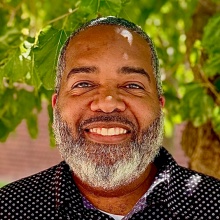
Assistant Professor
Department of Sociology and Criminology
Gorman Jr. is a sociological social psychologist focusing on racial attitudes, racial identity, and second-class citizenship among Black adults in the U.S. His research investigates how U.S. institutions shape Black identity, attitudes and social thought. Currently, he is examining the contemporary prevalence and distribution of Du Boisian double consciousness, an overlooked classical sociological theory.

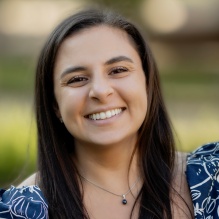
Assistant Teaching Professor
Social Sciences Interdisciplinary Program
Lattimer is a health communication scholar whose research lies at the intersection of disability studies and aging studies. She examines how marginalized populations navigate systems of care and how structural, interpersonal and media-related factors shape health and healthcare experiences. Using community-based and mixed-methods approaches, she collaborates with communities, health systems and national partners to advance more equitable, person-centered care.