Ecology and Evolution
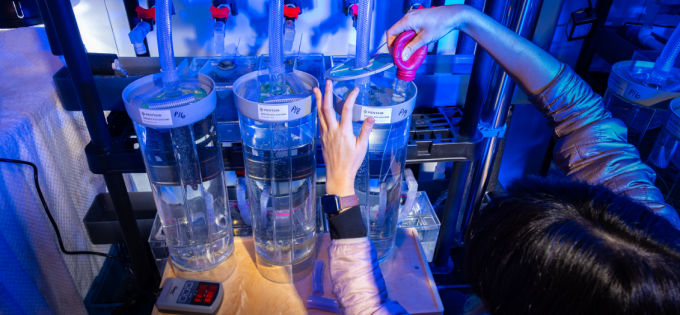
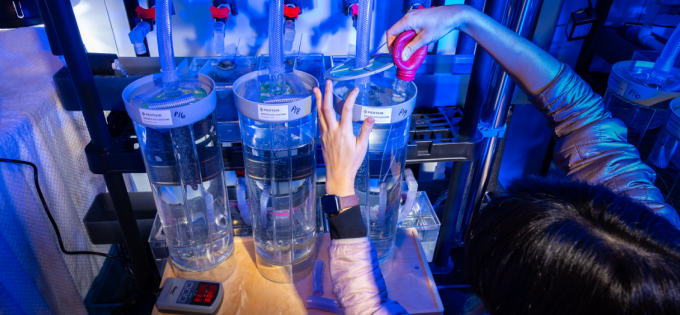
A student in the biology lab of Trevor Krabbenhoft does research using AI around fish eggs.
How life changes over time and space
Ecology and evolution explore how organisms adapt, diversify and interact with their environments across generations. From genes to ecosystems, this research area connects biological change to environmental forces shaping life on Earth.
Great for students interested in environmental science, conservation, biodiversity, climate change, genetics or evolutionary biology.
Research in ecology and evolution asks questions such as:
- How do species adapt to changing environments?
- How does genetic variation influence survival and reproduction?
- How are populations connected across landscapes and time?
- How do organisms interact within communities and ecosystems?
- What forces drive biodiversity and extinction?
Ecology and evolution research spans multiple scales, from molecular changes in DNA to interactions among species and ecosystems. Studies may focus on evolutionary history, population dynamics, genomic patterns or ecological relationships in natural and experimental systems.
By combining fieldwork, laboratory methods and computational approaches, this research helps explain how life responds to environmental change.
Ecology and evolution commonly explore:
- Evolutionary biology and evolutionary genetics
- Population genomics and molecular phylogenetics
- Plant and animal evolution
- Chromatin, genome stability and chromosome function
- Aquatic and terrestrial population biology
- Community and ecosystem ecology
Together, these approaches reveal how biological systems persist, adapt and transform over time.
Connects naturally to
Genetics, genomics, plant biology, animal systems biology, microbiology
Students can participate in research that connects genetics, organisms and ecosystems through field studies, lab-based projects and interdisciplinary collaborations.